
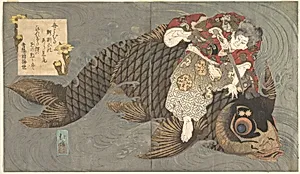
Shiei (?) on His Carp
Medium
Diptych of woodblock prints (surimono); ink and color on paper
Dimensions
Each print: 8 1/4 x 7 1/8 in. (21 x 18.1 cm)
Classification
Prints
Culture & Period
Japan · Edo period (1615–1868)
Department
Asian Art
Museum
Metropolitan Museum of Art, New York, NY
Credit
H. O. Havemeyer Collection, Bequest of Mrs. H. O. Havemeyer, 1929
Accession Number
JP1810
Rights
Public Domain
Tags
Art Historical Context
Behold *Shiei (?) on His Carp a captivating diptych of woodblock prints (surimono) by Totoya Hokkei, a Edo-period (1615–1868) artist known for his refined ukiyo-e style. Created in an unknown date but part of the luxurious H. O. Havemeyer Collection at the Metropolitan Museum of Art, each panel measures 8¼ x 7⅛ inches, showcasing Hokkei's mastery in ink and color on paper. Surimono, or "printed things," were privately commissioned prints often produced for New Year's greetings among Japan's elite, featuring deluxe techniques like embossing, mica, and vibrant pigments for an intimate, tactile appeal. The scene depicts a dynamic figure—likely the legendary warrior Shiei—astride a massive carp, sword in hand, evoking tales of heroism and the supernatural from Chinese lore adapted into Japanese art. Carp symbolize perseverance and transformation in East Asian culture, often linked to the myth of Koi ascending waterfalls to become dragons. The tags of swords, men, and fish highlight this bold interplay of human strength and nature's power, a popular motif in ukiyo-e celebrating martial prowess during the peaceful yet culturally vibrant Edo era. Hokkei's work exemplifies the technical brilliance of woodblock printing, where multiple blocks layered colors and textures to create lifelike movement on delicate paper. As a pupil of the famed Katsushika Hokusai, his precise lines and harmonious compositions invite viewers to ponder the fusion of myth, valor, and artistry in Japan's floating world.
About the Artist
Totoya Hokkei · 1780–1850
Totoya Hokkei (魚屋 北渓, 1780–1850), born Iwakubo Tatsuyuki in Edo (modern Tokyo), began his life as a humble fishmonger in the Yotsuya Samegahashi district, a trade reflected in his art name "Totoya," meaning fish shop. He transitioned to art through rigorous training, first studying under Kanō Yōsen'in Korenobu, head of the Kobikichō branch of the prestigious Kanō school, where he honed landscape p...