
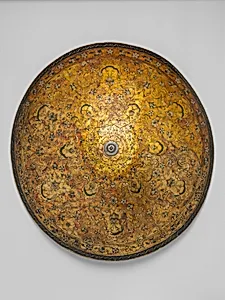
Shield
Unknown Artist
ca. 1600
Medium
Wood, leather, gesso, polychromy, gold, silver foil
Dimensions
Diam. 23 1/2 in. (59.69 cm); Wt. 4 lb. 12 oz. (2155 g)
Classification
Shields
Culture
Italian, probably Venice
Department
Arms and Armor
Museum
Metropolitan Museum of Art, New York, NY
Credit
Gift of Stephen V. Grancsay, 1942
Accession Number
42.50.31
Rights
Public Domain
Art Historical Context
This stunning parade shield, dating to around 1600 and likely crafted in Venice, Italy, exemplifies the opulent fusion of function and artistry in Renaissance arms and armor. Measuring 23½ inches in diameter and weighing over 4 pounds, it was designed not for battlefield combat—by this era, firearms had diminished the role of shields—but for ceremonial display, perhaps in tournaments or processions. Its Venetian origins highlight the city's renown as a hub for luxurious metalwork and decorative arts, blending martial tradition with the grandeur of the Serenissima Republic. Crafted from a wooden core wrapped in leather, the shield features a gesso underlayer—a fine plaster ground ideal for detailed painting—adorned with vibrant polychromy (multi-colored pigments) and shimmering gold and silver foils. These techniques elevated it from mere protection to a masterpiece of embellishment, showcasing the virtuoso skills of anonymous Italian artisans who rivaled painters in their use of light, color, and texture to evoke prestige and power. A generous gift to The Metropolitan Museum of Art in 1942 from arms expert Stephen V. Grancsay, this shield offers a glimpse into Venice's cultural splendor at the dawn of the Baroque age, where even weapons became symbols of refined elegance. Visitors, imagine it gleaming under torchlight in a grand palazzo!