
Shield (Pavise)
Unknown Artist
ca. 1450–75
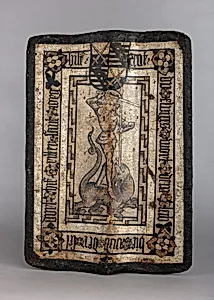
Medium
Wood, leather, gesso, silver foil, polychromy
Dimensions
H. 25 5/8 in. (65.1 cm); W. 17 1/2 in. (44.5 cm); Wt. 7 lb. 2 oz. (3230 g)
Classification
Shields
Culture
German, Saxon
Department
Arms and Armor
Museum
Metropolitan Museum of Art, New York, NY
Credit
Bashford Dean Memorial Collection, Funds from various donors, 1929
Accession Number
29.158.596
Rights
Public Domain
Tags
Art Historical Context
This striking pavise shield, crafted in Saxon Germany around 1450–75, exemplifies the fusion of functionality and artistry in late medieval arms. Measuring about 25 inches tall and weighing over seven pounds, it was designed for infantrymen, particularly crossbowmen, providing full-body protection on the battlefield while allowing mobility. Its robust construction—wood reinforced with leather, coated in gesso for a smooth painting surface, and embellished with silver foil and vibrant polychromy—transformed a tool of war into a painted masterpiece. The shield's central motif features Saint George triumphantly slaying a dragon, a beloved emblem of Christian chivalry and the triumph of good over evil. Such iconography was common on ceremonial and parade shields, inspiring knights and soldiers during an era of frequent conflicts in the Holy Roman Empire. The detailed polychrome decoration, with its metallic highlights, would have gleamed under sunlight, blending religious devotion with martial pride. Housed in the Metropolitan Museum of Art's Arms and Armor Department as part of the Bashford Dean Memorial Collection, this anonymous work highlights how everyday objects became canvases for cultural storytelling, offering a vivid glimpse into 15th-century Saxon life.