
Shield (Dhàl)
Unknown Artist
18th–19th century
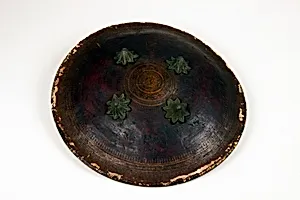
Medium
Hide, copper alloy, leather, lacquer, polychromy
Dimensions
Diam. 14 1/4 in. (36.2 cm); Wt. 2 lbs. 10.8 oz. (1213.4 g)
Classification
Shields
Culture
Indian
Department
Arms and Armor
Museum
Metropolitan Museum of Art, New York, NY
Credit
Bequest of George C. Stone, 1935
Accession Number
36.25.618
Rights
Public Domain
Art Historical Context
This elegant *Dhàl* shield, crafted by an unknown Indian artist in the 18th–19th century, exemplifies the fusion of functionality and artistry in traditional Indian arms and armor. Measuring just 14¼ inches in diameter and weighing around 2.7 pounds, its lightweight design made it ideal for mounted warriors, who wielded it deftly in one hand alongside a sword or lance. Displayed in the Metropolitan Museum of Art's Arms and Armor Department, it entered the collection through the 1935 bequest of George C. Stone, a passionate collector of global weaponry. Constructed from hide stretched taut over a frame, reinforced with copper alloy elements for durability and impact resistance, the shield also features leather components for secure handling. Lacquer provides a glossy protective finish, while polychromy—vibrant painted colors—adds decorative flair, possibly echoing motifs from Indian courtly or martial traditions. These techniques highlight the shield's dual role as both a defensive tool and a status symbol, reflecting the sophisticated craftsmanship of India's regional kingdoms during a period of intense warfare and cultural exchange under Mughal and post-Mughal influences. In Indian culture, the *Dhàl* symbolized a warrior's prowess and heritage, often customized for elite cavalry like Rajputs or Sikhs. Though battle-worn examples survive, this well-preserved piece invites us to appreciate the artistry behind everyday heroism.