
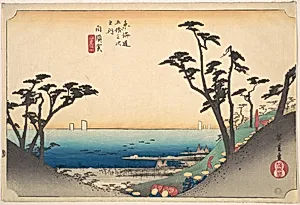
東海道五十三次之内 白須賀 汐見阪図|Shirasuka, Shio-mi Zaka
ca. 1834
Medium
Woodblock print; ink and color on paper
Dimensions
9 15/32 x 14 1/16 in. (24.1 x 35.7 cm)
Classification
Prints
Culture & Period
Japan · Edo period (1615–1868)
Department
Asian Art
Museum
Metropolitan Museum of Art, New York, NY
Credit
Rogers Fund, 1918
Accession Number
JP503
Rights
Public Domain
Tags
Art Historical Context
This enchanting woodblock print by Utagawa Hirosh, titled *Shiras, Shio-mi Zaka* (ca. 1834), captures a dramatic hillside scene from his renowned series *The Fifty-three of the Tōkaidō*. Part of the historic coastal highway connecting Edo (modern Tokyo) to Kyoto, Shirasuka station features the steep Tide-Viewing Hill, where travelers pause amid sweeping views of the sea. Hirosh's masterful composition draws the eye upward along the winding path, blending human figures with nature's grandeur. Created during Japan's Edo period (1615–1868), this *ukiyo-e* print exemplifies the "floating world" genre's shift toward landscapes. Printed with ink and vibrant colors on paper, it showcases Hiroshige's innovative techniques: subtle gradations (*bokashi*) for misty atmospheres, bold outlines, and dynamic perspectives that evoke movement and emotion. These affordable prints brought distant scenery to urban audiences, fueling a travel craze. Housed in the Metropolitan Museum of Art's Asian Art collection (Rogers Fund, 1918), the work highlights Edo Japan's cultural vibrancy and artistic ingenuity. Hiroshige's influence later inspired Impressionists like Monet, bridging Eastern and Western traditions in a timeless celebration of Japan's natural beauty.
About the Artist
Utagawa Hiroshige · 1826–1869
Utagawa Hiroshige (1797–1858), born Andō Tokutarō, was the last great master of Japanese ukiyo-e woodblock printmaking and one of the most influential landscape artists in history. Born in Edo (modern Tokyo) into a low-ranking samurai family serving as fire wardens, Hiroshige transformed landscape printmaking into a poetic meditation on nature, weather, and everyday life. His revolutionary approac...