
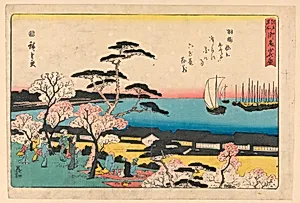
Viewing of the cherry blossoms
1797-1858
Classification
landscapes
Department
Smithsonian Collection
Museum
Smithsonian American Art Museum
Credit
Gift of the Estate of Mrs. Robert H. Patterson
Accession Number
1941-31-191
Rights
Public Domain
About this artwork
Research in Progress
Art Historical Context
Ando Hiroshige (1797–1858), one of Japan's most celebrated ukiyo-e masters, captures the fleeting beauty of nature in *Viewing of the Cherry Blossoms*. A leading figure of the Edo period, Hiroshige revolutionized landscape printmaking with his evocative depictions of everyday scenes, journeys, and seasonal wonders. His works, often produced as woodblock prints, brought the transient splendor of Japan's countryside to urban audiences, influencing later artists like Vincent van Gogh and Claude MonetCherry blossoms, or *sakura*, hold profound cultural significance in Japan, symbolizing the ephemeral nature of life through the tradition of *hanami*—communal blossom-viewing picnics. This landscape likely portrays revelers beneath blooming trees, evoking a sense of harmony between humans and the natural world, a hallmark of Hiroshige's poetic style. His masterful use of color gradients and atmospheric perspective creates depth and emotion, even in intimate vignettes. Now part of the Smithsonian American Art Museum's collection—gifted by the Estate of Mrs. Robert H. Patterson—this piece bridges Eastern artistry with American tastes. Though research continues, it exemplifies Hiroshige's enduring legacy in celebrating impermanence and beauty.