
Shiva
Unknown Artist
mid- 7th century
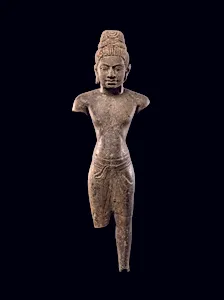
Medium
Sandstone
Dimensions
H. 24 in. (61 cm); W. 7 3/4 in. (19.7 cm); D. 4 in. (10.2 cm)
Classification
Sculpture
Culture & Period
Southern Cambodia or Vietnam · pre-Angkor period
Department
Asian Art
Museum
Metropolitan Museum of Art, New York, NY
Credit
Rogers Fund, 1987
Accession Number
1987.17
Rights
Public Domain
Tags
Art Historical Context
This striking sandstone sculpture of Shiva, created in the mid-7th century, offers a window into the rich Hindu traditions that flourished in Southeast Asia long before the rise of the Angkor Empire. Standing 24 inches tall, the figure hails from southern Cambodia or Vietnam during the pre-Angkor period, a time when Indian cultural and religious influences shaped local art and society. Carved from durable sandstone, it reflects the skill of unknown artisans who adapted techniques to create enduring devotional images for temples and shrines. As a representation of Shiva—one of Hinduism’s principal deities—the work embodies themes of transformation, power, and cosmic balance central to the faith. Its compact dimensions suggest it may have served as a portable icon or part of a larger architectural setting, highlighting the widespread devotion to Hindu gods across the region. Today housed in the Metropolitan Museum of Art’s Asian Art collection, this piece reminds visitors of the deep historical connections between South and Southeast Asian cultures. The sculpture’s survival from the pre-Angkor era underscores its cultural importance, illustrating how early communities expressed spiritual beliefs through stone carving. It invites viewers to appreciate the artistry and religious fervor that laid foundations for later Khmer achievements.