
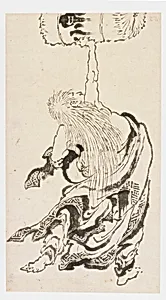
Shojo Lifting a Sake Keg
ca. 1840s
Classification
Painting
Department
Smithsonian Collection
Museum
Smithsonian American Art Museum
Credit
Gift of Charles Lang Freer
Accession Number
F1904.255
Rights
Public Domain
Tags
About this artwork
To 1904
Art Historical Context
In the vibrant world of 19th-century Japanese art, Katsushika Hokusai (1760-1849) captures folklore with playful energy in *Shojo Lifting a S Keg*, created around the 1840s during Japan's Edo period (1615-1868). This painting depicts a mythical shōjō—a red-faced, long-haired spirit renowned in Japanese legends for its insatiable love of sake—hoisting a massive keg with effortless strength. Hokus, the master of ukiyo ("pictures of the floating world"), infuses the scene with his signature dynamic lines and exaggerated forms, evoking humor and whimsy amid everyday indulgences like rice wine. Shōjō figures symbolize revelry and the blurred line between human excess and supernatural joy, drawing from ancient tales where these sake-loving goblins emerge from mountains or seas to party with mortals. Produced late in Hokusai's prolific career—after iconic works like *The Great Wave off Kanagawa*—this piece reflects Edo Japan's fascination with urban culture, festivals, and escapism under strict samurai rule. A cherished part of the Smithsonian American Art Museum's collection, the painting was gifted by Charles Lang Freer, whose early 20th-century acquisitions (documented to 1904) brought treasures of Japanese art to American shores, bridging Eastern folklore with global audiences.