
Shrimp and Cuttlefish
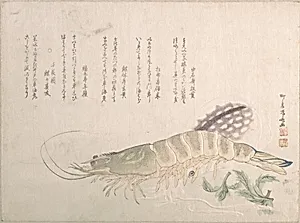
Medium
Woodblock print (surimono); ink and color on paper
Dimensions
8 3/16 x 11 in. (20.8 x 27.9 cm)
Classification
Prints
Culture & Period
Japan · Edo period (1615–1868)
Department
Asian Art
Museum
Metropolitan Museum of Art, New York, NY
Credit
H. O. Havemeyer Collection, Bequest of Mrs. H. O. Havemeyer, 1929
Accession Number
JP2183
Rights
Public Domain
Tags
Art Historical Context
Ryūryūkyo Shinsai’s “Shrimp and Cuttlefish” is a delicate woodblock print (surimono) created during Japan’s Edo period. Surimono were privately commissioned works, often produced in limited editions for poetry societies or special occasions such as the New Year. Measuring just over eight by eleven inches, the print exemplifies the refined technique and intimate scale typical of these luxury editions, which combined ink and color on paper with meticulous attention to detail. The artist renders the two marine creatures with graceful precision, highlighting their textured shells and fluid forms against a simple ground. In Japanese visual culture, images of seafood frequently alluded to seasonal abundance, the rhythms of coastal life, and even auspicious symbols of longevity and renewal. Shinsai’s restrained yet lively composition invites viewers to appreciate both the natural beauty of the subjects and the subtle artistry of the print medium itself. Today housed in the Metropolitan Museum of Art’s Asian Art collection as part of the H. O. Havemeyer bequest, the work preserves a quiet moment of Edo-period elegance. Its modest size and poetic sensibility continue to offer museum visitors a glimpse into the refined tastes of 19th-century Japanese connoisseurs.
About the Artist
Ryūryūkyo Shinsai · 1799–1823
Ryūryūkyo Shinsai (柳々居辰斎), active from 1799 to 1823, was a prominent Japanese ukiyo-e printmaker based in Edo (modern Tokyo), renowned for his mastery of surimono—luxurious, privately commissioned woodblock prints produced for elite poetry circles and New Year's celebrations. He began his training under Tawaraya Sōri before becoming a student of the legendary Katsushika Hokusai, from whom he recei...