
Shroud
Unknown Artist
ca. A.D. 125
Medium
Linen, paint
Dimensions
L 160 × W. 101.4 cm (63 × 39 15/16 in.) Framed: H. 164.5 × W. 104.5 × D. 5.1 cm (64 3/4 in. × 41 1/8 in. × 2 in.)
Classification
Shroud, painted
Period
Roman Period
Department
Egyptian Art
Museum
Metropolitan Museum of Art, New York, NY
Credit
Gift of George D. Pratt, 1926
Accession Number
26.5
Rights
Public Domain
Tags
Art Historical Context
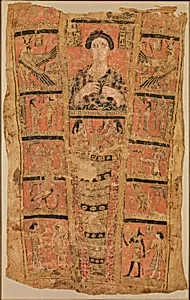
Step into the world of Roman Egypt with this hauntingly beautiful *Shroud* (ca. A.D. 125), a linen funerary wrapping painted by an unknown artist. Housed in the Metropolitan Museum of Art's Egyptian department, this delicate piece measures about 63 by 40 inches and was generously gifted by George D. Pratt in1926. Crafted the Roman Period, when blended its ancient traditions with Greco-Roman influences, the shroud served as a protective covering for a mummy, guiding the deceased toward the afterlife. Adorned with vivid paints on fine linen, the artwork features a portrait of a woman, flanked by the jackal-headed god Anubis—guardian of the dead—and graceful birds symbolizing the soul's journey. This fusion of realistic Roman portraiture with Egyptian iconography exemplifies the Fayum-style mummy portraits popular in the region, where encaustic or tempera techniques brought lifelike expressions and vibrant colors to everyday linens, making eternity feel intimately personal. Culturally, such shrouds highlight the syncretic spirit of Roman Egypt, where local beliefs in mummification merged with imperial portrait traditions. A poignant artifact of devotion and artistry, it invites us to ponder the universal quest for immortality through beauty.