
Funerary Shroud Fragment
Ptolemaic Period (332-30 BCE)
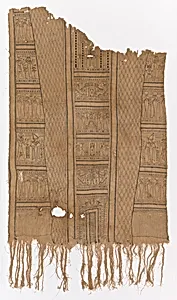
Medium
Linen, plain weave; painted; warp fringe
Dimensions
105.5 × 59.9 cm (41 1/2 × 23 1/2 in.)
Classification
textile
Department
Textiles
Museum
Art Institute of Chicago
Accession Number
64378
Rights
Public Domain
About this artwork
For thousands of years ancient Egyptians used linen for clothing and other purposes. Such textiles included mummy wrappings and funerary shrouds, like this fragmentary example, that were essential to preserving the body after death. The images of gods, goddesses, and other sacred symbols painted onto this shroud magically protected its owner, ensuring their access to a corporeal form in the afterlife. Along the sides, alternating panels depict deities with their hands raised in worship and gods...
About the Artist
Ancient Egyptian
Ancient Egyptian artists, a collective of highly skilled artisans spanning over three millennia from the Predynastic period (c. 6000–3150 BC) to the Roman era (30 BC–4th century AD), produced some of humanity's most enduring masterpieces. These anonymous craftsmen, often organized in state-sponsored workshops, lived in dedicated communities like Deir el-Medina near Luxor during the New Kingdom (c....