
Sibylle Delphique
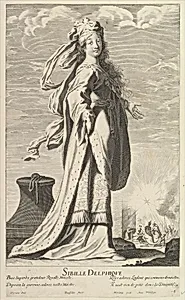
Medium
Engraving (figure by Rosselet) and etching (background by Bosse)
Dimensions
sheet: 14 1/8 x 8 3/8 in. (35.8 x 21.2 cm)
Classification
Prints
Department
Drawings and Prints
Museum
Metropolitan Museum of Art, New York, NY
Credit
Harris Brisbane Dick Fund, 1953
Accession Number
53.601.108
Rights
Public Domain
Tags
Art Historical Context
Behold the *Sibylle Delph*, a captivating 17th-century print the Metropolitan Museum of Art created around 1635 by a stellar collaboration of French artists: the figure engraved by Gilles Rousse, the background etched by Abraham Bosse, with possible involvement from Claude Vignon publisher Pierre Mariette. This depicts the Delphic Sibyl, the legendary prophetess of Apollo from ancient Greek mythology, often portrayed as a wise and mystical woman delivering divine oracles at Delphi. Measuring 14 1/8 x 8 3/8 inches, the print masterfully combines engraving's precise, intricate lines for the sibyl's flowing drapery and expressive features with etching's fluid, atmospheric strokes for the evocative background—highlighting the innovative printmaking techniques of the Baroque era. Such collaborations were common in 17th-century France, allowing artists to blend strengths and produce affordable reproductions of grand mythological subjects for a wider audience. This piece reflects the era's fascination with classical antiquity and powerful female figures, evoking the Renaissance revival of sibyls as symbols of prophecy and intellect. Acquired through the Harris Brisbane Dick Fund in 1953, it invites visitors to ponder the enduring allure of these enigmatic women in art history.
About the Artist
Abraham Bosse|Pierre Mariette|Gilles Rousselet|Claude Vignon · 1602–1676
Abraham Bosse (1604–1676) was a French printmaker and theorist whose approximately 1,600 etchings provide an unparalleled visual record of 17th-century French life. Born to Huguenot parents in Tours, he trained in Paris under Melchior Tavernier and became a devoted follower of Jacques Callot's technical innovations. Bosse's meticulous etchings depicted subjects ranging from daily life and fashion ...