Ctrl K
1602–1676
Occupations
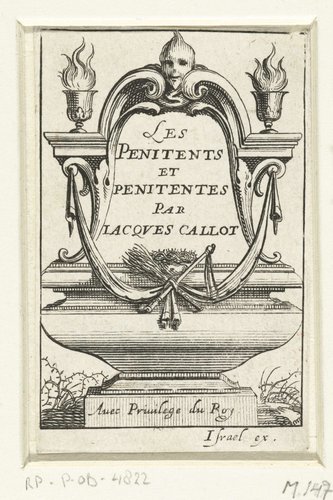
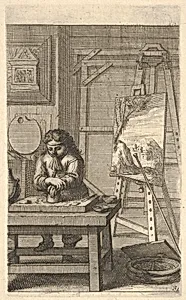
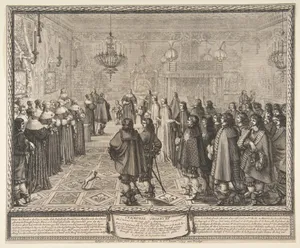
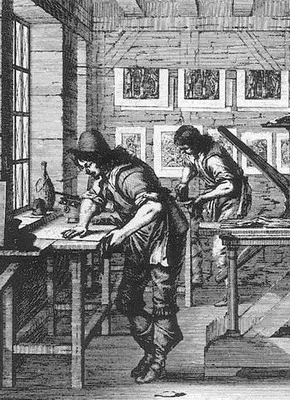
Abraham Bosse (1604–1676) was a French printmaker and theorist whose approximately 1,600 etchings provide an unparalleled visual record of 17th-century French life. Born to Huguenot parents in Tours, he trained in Paris under Melchior Tavernier and became a devoted follower of Jacques Callot's technical innovations. Bosse's meticulous etchings depicted subjects ranging from daily life and fashion to religion and science, always rendered with his characteristic attention to costume and architectural detail. His highly influential treatise 'Traité des manières de graver en taille-douce' (1645) was the first published work on etching technique and shaped printmaking practice across Europe. As an instructor at the Académie Royale, he championed the geometric perspective theories of Girard Desargues, though his uncompromising advocacy led to his controversial expulsion in 1661. Bosse's combination of grand interior settings with intimate domestic scenes was highly original and influenced artists including William Hogarth.
Born in Tours, France in 1604 to Huguenot parents; his father was a tailor from Germany, which instilled in Bosse a lifelong attention to clothing details.
Apprenticed in Paris in 1620 to Melchior Tavernier, an Antwerp-born engraver and important publisher. His earliest etchings date to 1622, showing influence of Jacques Bellange.
Met Jacques Callot in Paris around 1630 and became devoted to his technical innovations in etching, particularly the use of the échoppe (beveled etching needle).
Married Catherine Sarrabat in Tours in 1632, establishing himself as a professional printmaker.
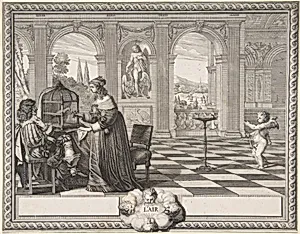
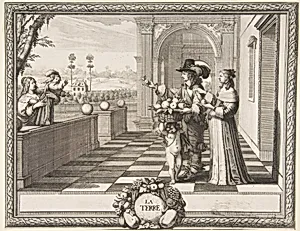
Developed a highly distinctive style combining Dutch and Flemish influences with French sensibility, creating detailed scenes of middle and upper-class French life.
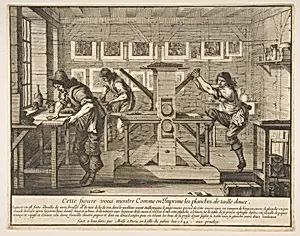
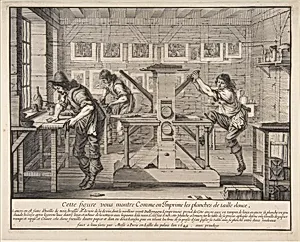
Published his landmark treatise 'Traité des manières de graver en taille-douce' in 1645, the first published work on etching technique, which was widely translated and influential across Europe.
Advocated making etchings resemble the precision of engravings, using the échoppe to create swelling lines that mimicked engraved strokes.
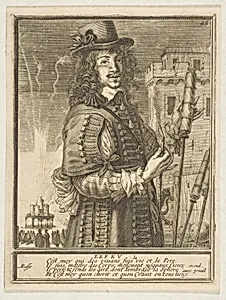
Produced vast numbers of book illustrations and individual prints depicting fashion, society, technology, and daily life with documentary precision.
Began attending classes by architect Girard Desargues on perspective in 1641, adopting and promoting his geometric theories through publications from 1643–1653.
Made honorary member of the newly established Académie Royale de Peinture et de Sculpture in 1651.
Served as instructor at the Académie, teaching printmaking and advocating strongly for Desargues' perspective methods.
Increasingly came into conflict with Charles Lebrun and his followers over artistic theories and teaching methods.
Expelled from the Académie Royale in 1661 due to his opposition to Charles Lebrun's artistic doctrines.
Founded his own private academy, but it was ordered closed in 1662 by royal decree under pressure from Lebrun.
Continued producing prints and theoretical writings despite his marginalization from official artistic circles.
Died on February 14, 1676, in Paris, leaving a legacy of approximately 1,600 etchings that serve as invaluable documents of 17th-century French society.
Artheon Research Team
Last updated: 2025-11-28
Biography length: ~850 words
Wikidata/Wikimedia Commons