
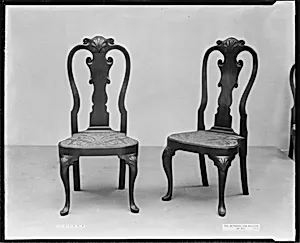
Side Chair
Unknown Artist
1740–60
Medium
Walnut, yellow pine
Dimensions
42 3/4 x 20 x 19 3/4 in. (108.6 x 50.8 x 50.2 cm)
Classification
Side Chair
Culture
American
Department
The American Wing
Museum
Metropolitan Museum of Art, New York, NY
Credit
Rogers Fund, 1925
Accession Number
25.115.7
Rights
Public Domain
Art Historical Context
This elegant side chair, crafted between 1740 and 1760 by an unknown American artisan, exemplifies the refined woodworking traditions of colonial America. Made from durable walnut for the visible frame and yellow pine for internal supports, it measures 42¾ x 20 x 19¾ inches, a comfortable scale suited for formal parlors or dining rooms. The choice of native hardwoods highlights the resourcefulness of 18th-century craftsmen, who sourced local materials to create sturdy yet graceful furniture essential to everyday life. During the mid-1700s, as the American colonies flourished under British influence, side chairs like this one served as symbols of hospitality and social status. Placed around tables or against walls, they facilitated gatherings in prosperous households, blending practicality with subtle elegance. Though the artist's identity remains unknown, the chair's construction reflects skilled joinery techniques—such as mortise-and-tenon joints—that ensured longevity, a testament to the anonymous mastery of colonial cabinetmakers. Acquired through the Rogers Fund in 1925 and housed in The Metropolitan Museum of Art's American Wing, this piece preserves a slice of early American domestic culture. It invites visitors to imagine the lives of its original owners, underscoring how everyday objects embody the ingenuity and aspirations of a young nation.