
Sideboard
1825–35
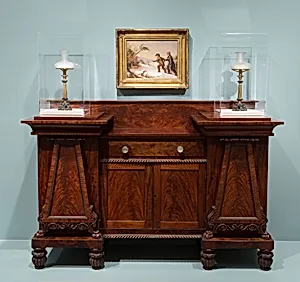
Medium
Mahogany, mahogany veneer, poplar, and eastern white pine
Dimensions
124.5 × 186.4 × 59.7 cm (49 × 73 3/8 × 23 3/4 in.)
Classification
case furniture
Department
Arts of the Americas
Museum
Art Institute of Chicago
Accession Number
46365
Rights
Public Domain
Art Historical Context
This elegant sideboard, crafted between 1825 and 183 by an unknown artisan, exemplifies the refined case furniture of early 19th-century America. Housed in the Art Institute of Chicago's Arts the Americas department, it an impressive 124. × 186.4 59.7 cm making it a substantial centerpiece for a prosperous dining room. Sideboards like this were essential in affluent households, designed to store fine china, silver, and linens while providing a grand serving surface for entertaining guests during the nation's expanding social scene. Constructed from luxurious mahogany with mahogany veneer over poplar and eastern white pine, the piece highlights skilled woodworking techniques of the era. Mahogany, imported from the Caribbean and Central America, symbolized wealth and status, its rich grain enhanced by veneer for decorative panels and intricate inlays. Poplar and pine served as sturdy secondary woods, cost-effective for hidden structural elements—a practical choice in American cabinetmaking workshops. Its neoclassical proportions reflect the period's taste for symmetry and grandeur, influenced by European revivals amid America's growing industrial confidence. Though the maker remains anonymous, this sideboard offers a window into everyday luxury, blending functionality with understated opulence for the emerging middle and upper classes.