
Classification
landscapes
Department
Smithsonian Collection
Museum
Smithsonian American Art Museum
Credit
Gift of Mrs. Arnold W. Brunner
Accession Number
1948-47-13
Rights
Public Domain
About this artwork
Research in Progress
Art Historical Context
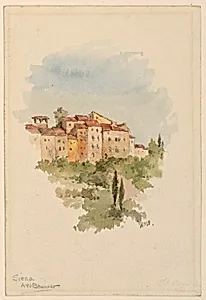
**Siena** (1883) by Arnold William Brunner captures the charm of the Italian city of Siena, a UNESCO World Heritage site renowned for its medieval architecture and rolling Tuscan hills. Created when Brunner was just 26 this landscape reflects the era's fascination among American artists with European travel and study. As a young architect-in-training, Brunner—born in New York City in 1857—likely or painted this during a formative trip abroad, blending his emerging design sensibilities with the timeless beauty of Italy's countryside. Though the medium remains unidentified amid ongoing research, the work exemplifies late 19th-century American interest in picturesque European scenes, a tradition that influenced figures like the Hudson River School painters. Brunner's later fame as a Beaux-Arts architect, designing landmarks such as the Bronx Borough Hall, underscores his multifaceted talent; this early piece hints at his keen eye for form and atmosphere that would define his built environments. Now part of the Smithsonian American Art Museum's collection, gifted by Mrs. Arnold W. Brunner, *Siena* invites visitors to ponder the intersections of painting and architecture in Gilded Age America. It stands as a quiet testament to an artist's global inspirations before his monumental contributions to the nation's skyline.