
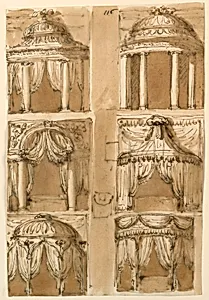
Six Designs for Bedroom Alcoves
Medium
interiors
Classification
interiors
Department
Smithsonian Collection
Museum
Smithsonian American Art Museum
Credit
Museum purchase through gift of various donors and from Eleanor G. Hewitt Fund
Accession Number
1938-88-1640
Rights
Public Domain
About this artwork
Research in Progress
Art Historical Context
**Six Designs for Bedroom Alcoves by Giuseppe Barberi (, 1746–1809), ca. 1790, offers a glimpse into late 18th-century Italian design. Barberi, a prominent Roman architect, specialized in elegant furnishings and decorative schemes that blended classical motifs with emerging neoclassical tastes. These designs for bedroom alcoves—recessed sleeping niches popular in grand European homes—showcase his vision for intimate, luxurious spaces, likely rendered as precise architectural drawings or engravings. Created during a transformative era when Enlightenment ideals influenced architecture, the work reflects Italy's shift toward rational, symmetrical interiors inspired by ancient Rome and Greece. Alcoves provided privacy and grandeur, often adorned with draped beds, ornate moldings, and pastel palettes, emphasizing comfort amid opulence. Barberi's output, including published pattern books, helped disseminate these styles across Europe. Housed in the Smithsonian American Art Museum through generous donor support, this piece from the Smithsonian Collection is a treasure under active research. It invites visitors to ponder how such designs shaped daily life for the elite, bridging art and architecture in the Age of Revolution. (198 words)