
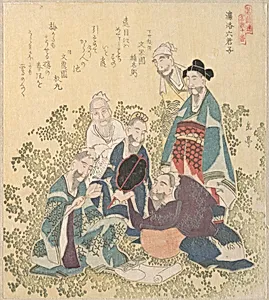
Six Superior Men of Reiraka
19th century
Medium
Woodblock print (surimono); ink and color on paper
Dimensions
8 3/16 x 7 1/4 in. (20.8 x 18.4 cm)
Classification
Prints
Culture & Period
Japan · Edo period (1615–1868)
Department
Asian Art
Museum
Metropolitan Museum of Art, New York, NY
Credit
H. O. Havemeyer Collection, Bequest of Mrs. H. O. Havemeyer, 1929
Accession Number
JP2098
Rights
Public Domain
Tags
Art Historical Context
In the vibrant world of Edo-period Japan (1615–1868), Yashima Gakutei crafted *Six Superior Men of Reaka*, a exquisite surimono woodblock print the early 19th. This intimate format—measuring just 8 3/16 x 7 1/4 inches—was typically commissioned for private New Year's greetings or poetry albums, showcasing Gakutei's mastery in ukiyo-e traditions. Using ink and color on paper the print likely features elegant portraits of six exemplary men from Reiraka, evoking ideals of virtue, wisdom, or historical prowess amid Japan's flourishing urban culture. Surimono like this one stand out for their luxurious techniques: intricate carving for fine lines, subtle gradations of color (bokashi), and often embossing or metallic accents for a tactile, poetic allure. Gakutei, a poet-artist himself, infused such works with literati elegance, blending realism with stylized beauty to honor cultural heroes. This piece reflects the Edo era's fascination with moral exemplars, bridging art and philosophy in everyday celebration. Now in the Metropolitan Museum of Art's H. O. Havemeyer Collection, it invites visitors to ponder timeless notions of superiority through Japan's woodblock legacy—a window into a refined, poetic past.
About the Artist
Yashima Gakutei · 1786–1868
Yashima Gakutei (c. 1786–1868), born in Osaka as the illegitimate son of a Tokugawa shogunate samurai named Hirata, adopted the name from his mother's subsequent marriage into the Yashima clan. Little is documented about his early years beyond these familial ties, but he pursued artistic training under the esteemed ukiyo-e masters Totoya Hokkei and Katsushika Hokusai, absorbing their precision in ...