
旧儀装飾十六式図譜|Sixteen Illustrations of Ancient Ceremonial Displays
1903
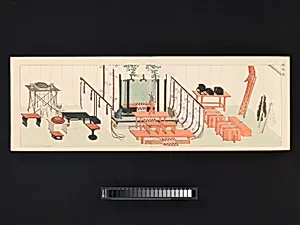
Medium
Woodblock printed book (orihon, accordion-style binding), ink on paper
Dimensions
9 5/8 × 14 1/2 in. (24.5 × 36.8 cm)
Classification
Illustrated Books
Culture & Period
Japan · Meiji period (1868–1912)
Department
Asian Art
Museum
Metropolitan Museum of Art, New York, NY
Credit
Gift of Anita V. Beenk, 2016
Accession Number
2016.751.4
Rights
Public Domain
Tags
About this artwork
This lavishly illustrated woodblock-printed book documents the ceremonial displays and decorative arrangements used in elite Japanese residences during formal occasions. The work presents architectural plans and detailed double-page spreads showing accouterments necessary for Court ceremonies, tea and incense rituals, coming-of-age celebrations, weddings, and the formal display of samurai armor and clothing. Each illustration employs color woodblock printing heightened with silver and textured i...
Art Historical Context
Furuya Kōrin's *Sixteen Illustrations of Ancientemonial Displays* (3) is a stunning woodblock-printed book in orihon accordion-style binding, capturing the opulent ceremonial setups of elite Japanese residences during formal events. This Meiji-period treasure features eighteen intricate double-page spreads detailing architectural plans and lavish arrangements for court ceremonies, tea and incense rituals, coming-of celebrations, weddings, and displays of samurai armor and clothing Printed with vibrant colors from multiple carved blocks, enhanced by silver and textured inks, it creates a sumptuous visual feast that feels alive with aristocratic splendor. Created for the Kyoto Art Society, the book emerged amid Japan's rapid Meiji-era modernization (1868–1912), when Western influences threatened traditional customs. Kōrin (1875–1910), a skilled illustrator, responded with archaeological precision and artistic elegance, documenting practices on the brink of vanishing. The woodblock technique—Japan's enduring printmaking tradition—highlights the tension between preservation and progress, using layered inks to evoke texture and depth. This work holds profound cultural significance as both a practical guide for maintaining rituals and a nostalgic homage to premodern Japan. It embodies a broader early-20th-century movement to safeguard heritage, inviting us to appreciate the delicate balance of tradition and modernity in a transforming nation.
About the Artist
Furuya Kōrin · 1875–1910
Furuya Kōrin (古谷紅麟, 1875–1910), born in the village of Kaizu in Shiga Prefecture near Kyoto, emerged as a pivotal figure in Japan's Meiji-era arts scene. He pursued rigorous training under several influential mentors, beginning with the Shijō-style painter Suzuki Mannen (1868–1893), followed by studies with the Western-style painter Asai Chū (1856–1907), and most significantly, the Rinpa revivalis...