
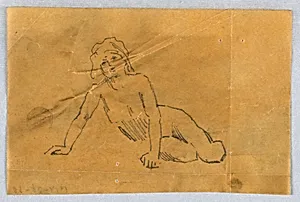
Sketch for Putto
Classification
figures
Department
Smithsonian Collection
Museum
Smithsonian American Art Museum
Credit
Smithsonian American Art Museum
Accession Number
1914-38-60
Rights
Public Domain
About this artwork
Research in Progress
Art Historical Context
**Sketch for Putto** *Francis Augustus Lathrop (American, 1849–1909), 1893–94 Francis Augustus Lathrop, a prominent American artist of the Gilded Age, created this preparatory sketch during the mid-1890s, a time when he was deeply engaged in decorative arts and mural painting. Trained in Europe and influenced by the Aesthetic Movement, Lathrop often drew from Renaissance traditions, blending classical motifs with American innovation. Housed in the Smithsonian American Art Museum's collection and classified as a figure study, this work reflects his meticulous approach to design, likely for a larger commission such as stained glass or ornamental panels—mediums where he excelled, including collaborations with Tiffany Studios. A "putto"—that cherubic, plump child figure symbolizing innocence, love, or divine playfulness—takes center stage here, evoking the joyful humanism of Italian Renaissance masters like Raphael. Though the medium remains unidentified (research ongoing), sketches like this were essential tools for artists, allowing rapid exploration of form, pose, and emotion before committing to final pieces. Lathrop's rendition captures the putto's lively spirit, bridging 19th-century revivalism with emerging modern sensibilities. This modest drawing offers a window into the creative process behind America's decorative renaissance, reminding us how everyday sketches fueled grand artistic visions. Visitors, ponder the little angel's gaze—it whispers of timeless whimsy amid industrial progress. (198 words)