
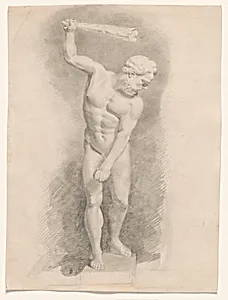
Sketch of sculpture, Hercules
date unknown
Medium
Drawing
Classification
Drawing
Department
Smithsonian Collection
Museum
Smithsonian American Art Museum
Credit
National Portrait Gallery, Smithsonian Institution; gift of Sally Adler with heartfelt gratitude to Emma Joy Linen Dana, George L. Linen’s great-granddaughter, and her four devoted sons, Richard, John, Andrew, and Gordon
Accession Number
AD/NPG.2018.1.23
Rights
Public Domain
Tags
Art Historical Context
Behold the *Sketch of Sculpture, Hercules a delicate drawing by George Linen (1802–1888), an American artist whose life spanned the early 19th century. Captured in an unknown date, this preparatory work depicts the mighty mythological hero Hercules, likely standing triumphantly on a pedestal while wielding his iconic club—a symbol of his superhuman strength and legendary Twelve Labors. Housed in the Smithsonian American Art Museum collection (with credit to the National Portrait Gallery, Institution), it exemplifies the era's fascination with classical antiquity, revived through neoclassical ideals in American art. As a simple yet evocative drawing, this piece highlights Linen's skill in rendering three-dimensional form on paper, possibly as a study for sculpture or personal exploration. Drawings like this were vital in the 19th century for artists sketching from antique casts or public monuments, bridging ancient myths with modern creativity. Hercules, the Roman counterpart to Greek Heracles, embodied virtues like heroism and perseverance, resonating in a young America building its cultural identity. This artwork's journey adds a heartfelt layer: it was gifted by Sally Adler with gratitude to Emma Joy Linen Dana, Linen's great-granddaughter, and her sons—Richard, John, Andrew, and Gordon—preserving family legacy within a national treasure trove. A window into personal artistry amid grand mythology, it invites us to ponder enduring human triumphs.