
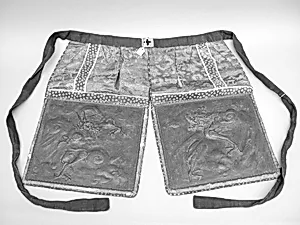
Skirt (Haidate)
Unknown Artist
ca. 1700
Dimensions
L 25 in. ( 63.5 cm) W 21 in. ( 53.34 cm) 25 X 21"
Classification
Costumes
Culture
Japanese
Department
Arms and Armor
Museum
Metropolitan Museum of Art, New York, NY
Credit
Rogers Fund, 1912
Accession Number
12.73a
Rights
Public Domain
Art Historical Context
Step into the world of samurai valor with this striking *Skirt (Haidate)*, a vital piece of Japanese armor dating to around 1700. Measuring 25 by 21 inches, this haidate served as thigh protection, shielding a warrior's lower body from blows during battle or ceremonial displays. Crafted during the Edo period—a time of relative peace under the Tokugawa shogunate reflects the enduring samurai tradition, where armor evolved from functional warfare gear to symbols of status and artistry. Though the artist remains unknown, the haidate exemplifies masterful Japanese armor-making techniques, likely featuring lacquered plates laced with silk cords for flexibility and durability. Classified as a costume within the Metropolitan Museum of Art's Arms and Armor department, it highlights how protective gear blended utility with aesthetic refinement, often adorned to evoke power and heritage. Acquired through the Rogers Fund in 1912, this artifact offers a tangible link to Japan's feudal past, inviting visitors to imagine the disciplined warriors who once donned it. Fun fact: Haidate allowed samurai fluid movement on horseback or foot, underscoring the ingenuity of Edo-era craftsmanship in balancing protection and mobility.