
Sleeve Band
Unknown Artist
19th century
Medium
Silk, metallic thread; on silk
Dimensions
36 1/2 x 6 in. (92.71 x 15.24 cm)
Classification
Textiles-Embroidered
Culture & Period
China · Qing dynasty (1644–1911)
Department
Asian Art
Museum
Metropolitan Museum of Art, New York, NY
Credit
Bequest of William Christian Paul, 1929
Accession Number
30.75.206
Rights
Public Domain
Tags
Art Historical Context
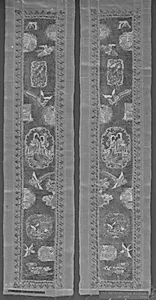
This exquisite **Sleeve Band** from19th-century Qing dynasty China (1644–1911) is a masterful example of embroidered textiles, crafted from silk adorned with shimmering metallic threads. 36½ x inches, it features intricate motifs of birds and human, common in elite Chinese garments. These decorative bands were typically sewn onto the sleeves of robes, enhancing the wearer's status with their luxurious sheen and fine detail. In the opulent Qing era, embroidery like this reached new heights of technical virtuosity, blending silk's softness with metallic threads for a jewel-like effect. Birds often symbolized freedom and good fortune, while human figures might depict scholars or immortals, reflecting Confucian ideals and Daoist themes. Such pieces adorned Manchu nobility's clothing, showcasing the dynasty's love for elaborate surface decoration. Now housed in the Metropolitan Museum of Art's Asian Art Department (Bequest of William Christian Paul, 1929), this sleeve band highlights China's enduring textile legacy—where every stitch wove stories of culture, hierarchy, and artistry into wearable splendor.