
Slop Bowl
c. 1770
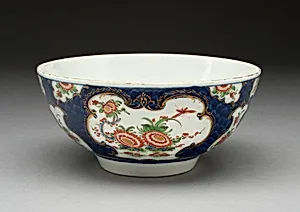
Medium
Soft-paste porcelain, underglaze blue, polychrome enamels and gilding
Dimensions
7 × 14.9 cm (2 3/4 × 5 7/8 in.); Diam.: 14.9 cm (5 7/8 in.)
Classification
slop bowl
Department
Applied Arts of Europe
Museum
Art Institute of Chicago
Accession Number
76486
Rights
Public Domain
Art Historical Context
Nestled in the Applied Arts of Europe collection at the Art Institute of, this delicate *Slop Bowl* from the Worcester Por Factory, circa 1770, exemplifies the elegance of 18th-century tableware. Measuring just 7 × 14.9 cm, it served a practical yet refined purpose in tea rituals: catching discarded tea leaves or rinse water, known as "slop," during social gatherings. Worcester, one of Britain's premier porcelain makers founded in 1751, rivaled Chinese imports with its innovative soft-paste—a creamy, vitreous body fired at lower temperatures than true hard-paste, allowing for intricate designs. The bowl's artistry shines through underglaze blue decoration, a technique where cobalt pigment is applied before glazing to create vivid, durable blues reminiscent of Asian wares, topped with vibrant polychrome enamels and shimmering gilding. These overglaze methods added lush colors and gold accents, showcasing the factory's mastery of multi-firing processes for opulent finishes. Such pieces highlight the Rococo influence of the era, blending functionality with luxury. In an age when tea drinking symbolized status, this slop bowl reflects Britain's booming consumer culture and porcelain mania. Visitors today can appreciate how everyday objects became canvases for artistic excellence, bridging utility and beauty in Georgian households.
About the Artist
Worcester Porcelain Factory · 1751–1783
**Worcester Porcelain Factory (1751–1783)** The Worcester Porcelain Factory, often called the Dr. Wall Period, was established in 1751 in Worcester, England, by physician Dr. John Wall and apothecary William Davis, who rallied 13 local businessmen to invest £4,500. Site at Warmstry House on the River Severn, the "Worcester Tonquin Manufactory" produced soft-paste porcelain using a steatite (soapr...