
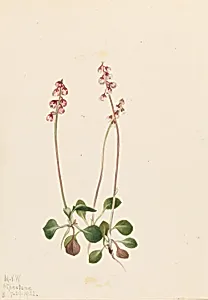
Small Pyrola (Pyrola minor)
Medium
Painting
Classification
Painting
Department
Smithsonian Collection
Museum
Smithsonian American Art Museum
Credit
Smithsonian American Art Museum, Gift of the artist
Accession Number
1970.355.510
Rights
Public Domain
Tags
Art Historical Context
Mary Vaux Walcott'sSmall Pyrola (Py minor)*, painted in 1922, is a tender celebration of nature's understated elegance. This painting from the Smithsonian American Art's collection depicts the small pyrola—a delicate wildflower with petite, rounded leaves and nodding white blooms that thrive in shady forests across North America. Walcott, a self-ta artist and avid naturalist, gifted the work to the museum, where it stands as a testament to her passion for documenting flora with meticulous detail. Created during a golden era of American botanical art, the piece reflects Walcott's commitment to blending science and aesthetics. As the wife of Smithsonian Secretary Charles Doolittle Walcott, she contributed hundreds of such studies, often rendered in watercolor to capture the flower's translucent petals and subtle veining with lifelike accuracy. These paintings not only served artistic purposes but also aided botanists, bridging art and discovery in the early 20th century. Today, *Small Pyrola* invites visitors to pause and appreciate the quiet beauty of overlooked plants, reminding us of nature's intricate designs preserved through an artist's discerning eye. A gift from Walcott herself, it embodies the Smithsonian's tradition of honoring both beauty and knowledge.