
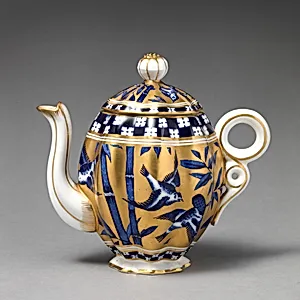
Small teapot
ca. 1891
Medium
Porcelain
Dimensions
confirmed: 4 15/16 × 5 1/4 × 3 1/4 in. (12.5 × 13.3 × 8.3 cm)
Classification
Ceramics-Porcelain
Culture
British, Coalport
Department
European Sculpture and Decorative Arts
Museum
Metropolitan Museum of Art, New York, NY
Credit
Gift of Helene Fortunoff and Robert Grossman, 2017
Accession Number
2018.62.143a, b
Rights
Public Domain
Art Historical Context
This delicate *Small Teapot* from Coalport, dating to around 1891, exemplifies the of British porcelain craftsmanship during the late Victorian era. Crafted from-fired porcelain—a medium prized for its translucency, strength, and ability to hold intricate designs—this compact piece measures just 4 15/16 × 5 1/4 × 3 1/4 inches, perfect for intimate tea gatherings. Coalport, a celebrated Shropshire-based manufactory, specialized in such luxurious ceramics, blending industrial precision with artistic finesse to produce everyday objects that doubled as status symbols. In 19th-century Britain, tea drinking was a cultural ritual that bridged social classes, and teapots like this one were essential to the afternoon tea tradition popularized by the Duchess of Bedford. Coalport's wares, often featuring refined shapes and subtle glazes, reflected the era's Aesthetic Movement influences, prioritizing beauty in functional design. This example highlights how porcelain evolved from elite import to a proudly British export, showcasing technical mastery in molding and firing that rivaled continental rivals like Sèvres or Meissen. Today, housed in The Metropolitan Museum of Art's Department of European Sculpture and Decorative Arts as a 2017 gift from Helene Fortunoff and Robert Grossman, it invites us to appreciate the artistry in the domestic sphere—reminding visitors that even a simple teapot could brew elegance and conversation.