
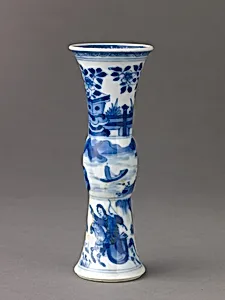
Small vase
1662–1722
Medium
Porcelain painted in underglaze blue.
Dimensions
Height: 13 cm.
Classification
Ceramics
Culture
Chinese
Department
Robert Lehman Collection
Museum
Metropolitan Museum of Art, New York, NY
Credit
Robert Lehman Collection, 1975
Accession Number
1975.1.1685
Rights
Public Domain
Tags
Art Historical Context
This delicate small vase, standing just 13 cm tall, hails from China's Qing dynasty during the Kangxi reign (2–1722), a golden era for porcelain production at the imperial kilns of Jingdezhen. Craft from fine porcelain and adorned with underglaze blue painting—a technique where cobalt pigment is applied to the unfired clay before a transparent glaze is added and fired—this piece exemplifies the technical mastery of the period. The vivid blue motifs, likely featuring elegant horses as suggested by its tags, would have emerged sharp and luminous from the high-temperature kiln. Blue-and-white porcelain like this reached new heights of refinement under Kangxi, blending Ming dynasty traditions with innovative designs that captivated global markets via the Silk Roads and maritime trade. Horses, powerful symbols of speed, nobility, and imperial might in Chinese culture, often galloped across such vases, evoking the grandeur of the emperor's stables and nomadic influences from the north. Now part of the Robert Lehman Collection at The Metropolitan Museum of Art (acquired in 1975), this petite vessel invites us to appreciate the artistry of anonymous potters whose work bridged East and West, turning everyday clay into timeless treasures.
About the Artist
Chinese
The artist known simply as "Chinese" in museum records represents the vast tradition of anonymous or unattributed masters in Chinese art history, with 99 works preserved in our collection. These pieces exemplify the enduring legacy of guó huà, or traditional Chinese painting, one of the world's oldest continuous artistic practices. Early life is not well documented, as is common for many practitio...