
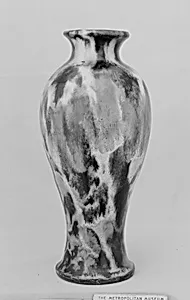
Small Vase
Unknown Artist
19th century
Medium
Clay covered with glaze (Seto ware)
Dimensions
H. 6 1/8 in. (15.6 cm)
Classification
Ceramics
Culture & Period
Japan · Edo (1615–1868) or Meiji period (1868–1912)
Department
Asian Art
Museum
Metropolitan Museum of Art, New York, NY
Credit
Gift of Mr. and Mrs. Samuel Colman, 1893
Accession Number
93.1.69
Rights
Public Domain
Art Historical Context
This delicate Small Vase, standing just 6 1/8 inches tall, exemplifies the refined artistry of 19th-century Japanese ceramics the Seto kilns. Crafted from clay and coated with a glossy glaze, it hails from either the late Edo period (1615–1868) or early Meiji era (1868–1912), times of cultural flourishing and rapid modernization in Japan. Seto ware, produced in the Aichi Prefecture town of Seto—a hub of pottery-making since ancient times—was renowned for its technical mastery and vibrant glazes, making it a staple for both everyday use and decorative display. The vase's modest size suggests it may have served in domestic settings, perhaps holding flowers or incense, reflecting Japan's aesthetic of wabi-sabi: beauty in simplicity and imperfection. During the Edo and Meiji periods, Seto potters innovated with diverse glaze techniques, achieving durable, waterproof surfaces that protected the underlying clay while adding subtle luster. This piece, gifted to the Metropolitan Museum of Art in 1893 by Mr. and Mrs. Samuel Colman, offers a window into Japan's ceramic heritage, bridging traditional craftsmanship with the global appreciation that followed the nation's opening to the West. Today, it invites visitors to ponder the quiet elegance of functional art, where form meets utility in perfect harmony.