
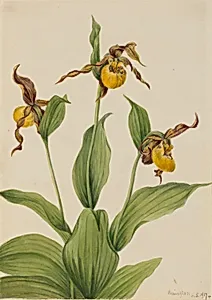
Small Yellow Ladyslipper (Cypripedium parviflorum)
Medium
Painting
Classification
Painting
Department
Smithsonian Collection
Museum
Smithsonian American Art Museum
Credit
Smithsonian American Art Museum, Gift of the artist
Accession Number
1970.355.430
Rights
Public Domain
Tags
Art Historical Context
Mary Vaux Walcott'sSmall Yellow Ladysl (Cypripediumiflorum)*, in 1917, the delicate beauty of this native North American orchid with scientific precision and artistic grace. As part of the Smithsonian American Art's collection—gifted directly by the artist—this painting exemplifies Walcott's lifelong passion for documenting wildflowers. The small yellow ladyslipper, with its pouch-like bloom and intricate veining, is rendered in exquisite detail, highlighting the flower's rarity and ecological importance in wetlands and meadows across the continent. Walcott, a pioneering botanist and artist (1860–1940), created hundreds of such works during expeditions, often painting en plein air in rugged terrains like the Canadian Rockies. Her style blends realism with subtle color harmonies, bridging art and science at a time when botanical illustration was vital for conservation and study. Produced amid World War I, this piece reflects a quieter pursuit of nature's wonders, later featured in her acclaimed publication *North American Wild Flowers* (1924–1929). Today, it invites visitors to appreciate not just the orchid's charm but Walcott's legacy as a self-taught woman advancing both fields. A testament to patient observation, it reminds us of wildflower's fleeting magic. (198 words)