
Snuff Bottle with Cranes under a Pine Tree
Unknown Artist
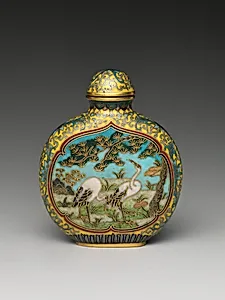
Medium
Cloisonné enamel
Dimensions
H. 2 3/4 in. (7 cm); W. 2 5/16 in. (5.9 cm); D. 3/4 in. (1.9 cm)
Classification
Snuff Bottles
Culture & Period
China · Qing dynasty (1644–1911), Qianlong mark and period (1736–95)
Department
Asian Art
Museum
Metropolitan Museum of Art, New York, NY
Credit
Gift of Joan A. Schorsch, 2004
Accession Number
2004.558a, b
Rights
Public Domain
Tags
Art Historical Context
This exquisite snuff bottle, titled *Snuff Bottle with Cr under a Pine Tree*, the refined artistry of China's Qing dynasty during the Qianlong period (1736–95). Crafted in cloisonné enamel—a technique where thin metal wires outline intricate designs on a metal body, which are then filled with vibrant glass enamels and fired multiple times for a glassy sheen—this small vessel (just 2¾ inches tall) was likely produced in imperial workshops. The Qianlong mark on the base signifies its association with Emperor Qianlong's reign, a golden age of artistic innovation and patronage. The bottle's decoration features graceful cranes perched beneath a stately pine tree, symbols deeply rooted in Chinese culture. Cranes represent longevity and immortality, while pines evoke steadfastness and resilience, making this motif an auspicious emblem of good fortune and enduring life. Such imagery was popular among the elite, who prized snuff bottles as portable treasures. Introduced via European trade in the 17th century, snuff bottles evolved from functional tobacco containers into coveted collectibles, showcasing technical mastery and aesthetic elegance. Gifted to the Metropolitan Museum of Art in 2004, this piece invites visitors to appreciate the Qing court's blend of utility and opulence in Asian art.