
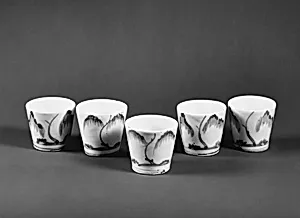
Soba cup
Unknown Artist
late 17th–early 18th century
Medium
Porcelain with underglaze blue (Arita ware)
Dimensions
H. 2 1/2 in. (6.4 cm); Diam. 2 1/2 in. (6.4 cm)
Classification
Ceramics
Culture & Period
Japan · Edo period (1615–1868)
Department
Asian Art
Museum
Metropolitan Museum of Art, New York, NY
Credit
The Harry G. C. Packard Collection of Asian Art, Gift of Harry G. C. Packard, and Purchase, Fletcher, Rogers, Harris Brisbane Dick, and Louis V. Bell Funds, Joseph Pulitzer Bequest, and The Annenberg Fund Inc. Gift, 1975
Accession Number
1975.268.692
Rights
Public Domain
Art Historical Context
This exquisite soba cup, crafted in Japan's Arita kilns during the late th to early 18th century exemplifies the pinnacle of Edo-period (1615–1868) porcelain artistry. Measuring just 2½ inches in height and diameter, its petite scale was ideal for serving chilled buckwheat noodles (soba) with dipping sauce or even tea, reflecting the era's blend of everyday practicality and refined elegance. Arita ware, produced in Saga Prefecture, marked Japan's mastery of porcelain after its introduction from China, fueling both domestic use and global export through Nagasaki. The cup's underglaze blue decoration—cobalt pigment applied to the unfired clay and sealed beneath a transparent glaze before high-temperature firing—created enduring, vibrant hues resistant to wear. This technique, perfected at Arita, allowed for intricate designs that captured nature's motifs, evoking the serene beauty prized in Japanese aesthetics. Though the artist remains unknown, such vessels highlight the anonymous craftsmanship of skilled potters serving a burgeoning merchant class amid Japan's peaceful isolation. Housed in the Metropolitan Museum of Art's Asian Art Department from the Harry G. C. Packard Collection, this soba cup offers a window into Edo Japan's vibrant culinary culture, where simple ceramics elevated daily rituals into moments of quiet appreciation.