
Soba cup
Unknown Artist
late 17th–early 18th century
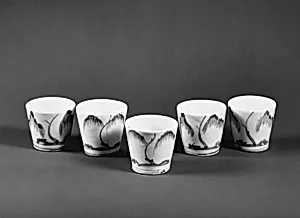
Medium
Porcelain with underglaze blue (Arita ware)
Dimensions
H. 2 1/2 in. (6.4 cm); Diam. 2 3/4 in. (7 cm)
Classification
Ceramics
Culture & Period
Japan · Edo period (1615–1868)
Department
Asian Art
Museum
Metropolitan Museum of Art, New York, NY
Credit
The Harry G. C. Packard Collection of Asian Art, Gift of Harry G. C. Packard, and Purchase, Fletcher, Rogers, Harris Brisbane Dick, and Louis V. Bell Funds, Joseph Pulitzer Bequest, and The Annenberg Fund Inc. Gift, 1975
Accession Number
1975.268.689
Rights
Public Domain
Art Historical Context
This exquisite soba cup, crafted in Arita ware porcelain during Japan's Edo period (late 17th–early 18th century), embodies the refined artistry of everyday life. Measuring just 2 inches tall and 2¾ inches in diameter, it was designed for sipping the flavorful broth accompanying soba noodles—a staple enjoyed by merchants, samurai, and commoners alike in this era of peace and cultural flourishing. Its petite scale made it ideal for personal use at intimate meals or tea gatherings, highlighting the Japanese aesthetic of wabi-sabi, where simplicity and imperfection evoke quiet beauty. Arita ware, produced in Saga Prefecture, marked Japan's pioneering foray into porcelain after potters mastered kaolin clay and high-fired kilns in the early 1600s. The underglaze blue technique—applying cobalt pigment beneath a clear glaze before firing—created vibrant, enduring designs that resisted wear, mimicking prized Chinese imports while showcasing local innovation. Though the artist's identity is unknown, such cups often featured subtle motifs like waves or florals, symbolizing nature's transience. Part of The Harry G. C. Packard Collection at The Metropolitan Museum of Art, this cup reflects Edo Japan's vibrant export trade and domestic refinement. It invites us to appreciate how humble ceramics bridged utility and elegance, preserving cultural rituals across centuries.