
Socket from a Spearhead or a Ceremonial Staff
Unknown Artist
ca. 1607–17
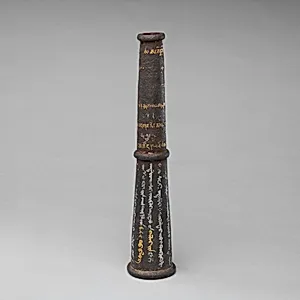
Medium
Iron, gold, silver
Dimensions
L. 11 3/4 in. (29.8 cm)
Classification
Shafted Weapons
Culture
Tibetan or Mongolian
Department
Arms and Armor
Museum
Metropolitan Museum of Art, New York, NY
Credit
Purchase, Arthur Ochs Sulzberger Gift, 2005
Accession Number
2005.301.1
Rights
Public Domain
Art Historical Context
This exquisite socket, likely from a spearhead or ceremonial staff, dates to around 1607–17 and hails from either Tibetan or Mongolian culture. Measuring 11¾ inches in length, it exemplifies the masterful fusion of utility and artistry in early 17th-century Central Asian arms. During this era, Tibet and Mongolia were intertwined through political alliances, Buddhist patronage, and nomadic warrior traditions, where such objects bridged warfare and ritual. Crafted from iron inlaid or overlaid with gold and silver, the socket showcases advanced metalworking techniques. The precious metals not only enhanced durability against corrosion but also elevated its status as a symbol of power and prestige—possibly wielded by nobility or in temple ceremonies. These embellishments reflect the region's reverence for ornate weaponry, blending practical forging with opulent decoration. Housed in the Metropolitan Museum of Art's Arms and Armor Department (purchase, Arthur Ochs Sulzberger Gift, 2005), this artifact invites us to ponder the lives of its makers and users, revealing how beauty and lethality coexisted in a world of empires and enlightenment.