
Sole of a Clog
16th century
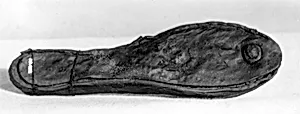
Medium
Leather covered cork
Dimensions
21 × 6.5 × 2 cm (8 1/4 × 2 9/16 × 3/4 in.)
Classification
textile
Department
Textiles
Museum
Art Institute of Chicago
Accession Number
31012
Rights
Public Domain
Art Historical Context
Step into the everyday artistry of the 16th century with the *Sole of a Clog*, a humble yet revealing artifact from the Art Institute of Chicago's Department. Crafted from leather-covered cork, this compact piece measures just 21 × 6.5 × 2 cm, designed for practicality in an era when footwear had to withstand mud, water, and hard labor. The use of cork—a lightweight, buoyant material sourced from Mediterranean trees—paired with durable leather, highlights innovative techniques for weather-resistant soles, common in Northern Europe where clogs were essential for workers and farmers. Though the artist remains unknown, this textile-classified object speaks volumes about material culture. Clogs, or wooden-soled shoes, were staples in regions like the Low Countries, protecting feet in flooded fields and cobblestone streets. The leather covering not only sealed the cork against rot but also added a touch of refinement, blending utility with subtle craftsmanship. Preserved for centuries, it offers a tactile glimpse into Renaissance daily life, where even the ground beneath one's feet embodied resourcefulness and regional ingenuity. Today, displayed among fine textiles, the *Sole of a Clog* reminds us that museum treasures aren't always grand canvases—sometimes, they're the sturdy foundations of history itself.
About the Artist
Unknown
The artist designated as "Unknown" in our virtual museum's collection exemplifies a poignant chapter in art history: creators whose identities have faded into obscurity despite the enduring power of their work. With only one known artwork attributed to them in our holdings, this figure represents countless anonymous hands that shaped visual culture across centuries. Museums worldwide, including th...