
Solidus
Unknown Artist
610–641
Medium
Gold
Dimensions
Overall: 7/8 x 1/16 in. (2.2 x 0.1 cm)
Classification
Coins
Culture
Byzantine
Department
Medieval Art
Museum
Metropolitan Museum of Art, New York, NY
Credit
Gift of Darius Ogden Mills, 1904
Accession Number
04.2.820
Rights
Public Domain
Tags
Art Historical Context
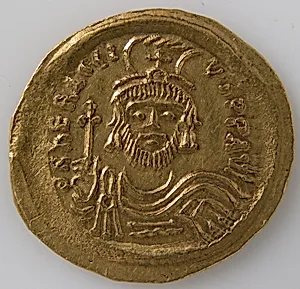
Behold the *Solidus*, a exquisite gold coin from the Byzantine Empire, minted between 610 and 641 CE. Measuring just 7/8 x 1/16 inches (2.2 x 0.1 cm), this treasure exemplifies the precision of medieval coinage. Crafted in pure gold—a medium symbolizing imperial wealth and stability—it served as a standard unit of currency across the empire's vast trade networks, from Constantinople to the edges of Europe and the Islamic world. Struck during a pivotal era in Byzantine history, the *Solidus* likely features portraits of emperors, as suggested by its tags, reflecting the ruler's divine authority and military prowess. The Heraclian dynasty (610–641) faced Persian invasions and Arab conquests, yet these coins projected unyielding power, their obverse and reverse designs blending classical Roman portraiture with Christian symbolism. As both money and propaganda, they underscored the empire's role as heir to Rome. Housed in the Metropolitan Museum of Art's Medieval Art Department (gift of Darius Ogden Mills, 1904), this *Solidus* invites us to ponder everyday artistry in antiquity—where even pocket change bore the weight of history. Its survival highlights Byzantine economic resilience amid turmoil.