
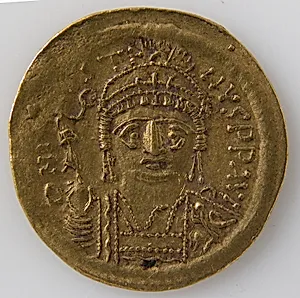
Solidus
Unknown Artist
565–578
Medium
Gold
Dimensions
Overall: 13/16 x 1/16 in. (2 x 0.1 cm)
Classification
Coins
Culture
Byzantine
Department
Medieval Art
Museum
Metropolitan Museum of Art, New York, NY
Credit
Gift of Darius Ogden Mills, 1904
Accession Number
04.35.3353
Rights
Public Domain
Tags
Art Historical Context
Behold the **Solidus**, a exquisite gold coin from the Byzantine Empire, minted between 565 and 578 CE during the reign of Emperor Justin II. Measuring just 13/16 x 1/16 inches, this tiny treasure exemplifies the empire's mastery of numismatic art. Crafted in pure gold—a medium symbolizing imperial wealth and divine favor—the solidus served as the backbone of Byzantine trade, maintaining a stable weight and purity that underscored Constantinople's economic prowess amid medieval Europe's turmoil. Featuring detailed human faces and figures, likely imperial portraits on the obverse and symbolic motifs on the reverse, the coin reflects Byzantine artistic conventions: stylized realism blending classical Roman heritage with Christian iconography. These designs weren't mere currency; they propagated the emperor's authority and the empire's orthodoxy, circulating from the Mediterranean to Central Asia. A gift to the Metropolitan Museum of Art from Darius Ogden Mills in 1904, this solidus invites us to ponder the daily pulse of a thriving civilization, where even money was a canvas for power and piety. Hold it close, and feel the weight of history in your palm!