
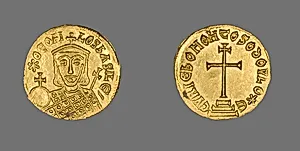
Solidus (Coin) of Theophilus
829-831
Medium
Gold
Dimensions
Diam.: 2.1 cm (7/8 in.)
Classification
coin
Department
Arts of Greece, Rome, and Byzantium
Museum
Art Institute of Chicago
Accession Number
142685
Rights
Public Domain
About this artwork
As powerful vehicles for propaganda, Byzantine coins also emphasized the close relationship between earthly monarchs and the heavenly realm, as does this solidus of Theophilus (r. 829-842). A bust-length portrait of the emperor appears on the obverse; he wears a crown and is garbed in the imperial loros, a heavily jeweled stole for festive occasions. In his hands are a globe and a scepter, both of which are surmounted by crosses. The patriarchal cross above three steps that appears on the revers...
Art Historical Context
This exquisite gold solidus, minted between 829 and 831 during the Byzantine era, exemplifies the refined craftsmanship of imperial coinage. Measuring just 2.1 centimeters in diameter, the coin’s compact size belies its importance as a standardized unit of currency that facilitated trade across the vast Byzantine Empire. Struck in pure gold, it reflects the empire’s enduring commitment to a stable monetary system rooted in Roman traditions. As a product of Byzantine artistry, the solidus served both practical and symbolic purposes. Its design typically featured the emperor’s portrait on one side, reinforcing imperial authority and divine favor, while the reverse often depicted religious or dynastic motifs. Created in the workshops of Constantinople, such coins highlight the sophisticated metallurgical techniques and aesthetic balance that defined Byzantine visual culture, blending functionality with expressions of power and faith. Today housed in the Art Institute of Chicago’s Arts of Greece, Rome, and Byzantium collection, this piece offers visitors a tangible connection to the ninth-century Mediterranean world. Its survival underscores the coin’s role not only as economic currency but also as a lasting emblem of Byzantine resilience and cultural continuity.
About the Artist
Byzantine
"Byzantine" is the collective attribution given to anonymous artists working within the Eastern Roman (Byzantine) Empire, whose creations spanned from the 4th to the 15th centuries, primarily in Constantinople and its cultural sphere. These masters produced a vast body of art that defined an era, with museums like the Walters Art Museum and the Art Institute of Chicago cataloging numerous works un...