
Solidus of Heraclius and Heraclius Constantine
Unknown Artist
629–631
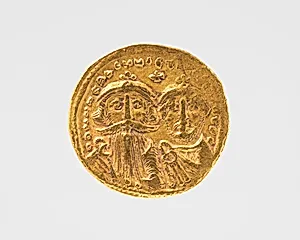
Medium
Gold
Dimensions
Overall: 13/16 x 1/16 in. (2.1 x 0.1 cm)
Classification
Coins
Culture
Byzantine
Department
Medieval Art
Museum
Metropolitan Museum of Art, New York, NY
Credit
Gift of Darius Ogden Mills, 1904
Accession Number
04.2.821
Rights
Public Domain
Art Historical Context
Welcome to the Byzantine wonders in our Medieval Art collection! This exquisite *Solidus of Heraclius Heraclius Constantine*, between 629 and 631, is a testament to imperial power. Crafted from pure gold, this tiny coin—measuring just 13/16 x 1/16 inches—features the Byzantine Emperor Heraclius (r. 610–641) alongside his son and co-emperor, Heraclius Constantine. Struck with remarkable precision, the obverse likely shows the senior emperor in profile, crowned and robed, while the reverse bears a cross-on-steps, symbolizing Christian triumph. Historically, this solidus emerged from a pivotal era. Heraclius had just reclaimed the True Cross from Persian invaders in 628 after decades of grueling war, restoring Byzantine prestige and stabilizing the empire. The solidus, weighing about 4.5 grams, was the backbone of the Byzantine economy—a stable gold standard that facilitated trade across Europe, the Middle East, and beyond for centuries. As numismatic art, it showcases the refined die-striking technique of Byzantine mints, where intricate portraits conveyed divine authority and legitimacy. Donated to the Metropolitan Museum of Art in 1904 by Darius Ogden Mills, this coin offers visitors a tangible link to an empire that bridged antiquity and the Middle Ages, blending artistry, faith, and imperial might.