
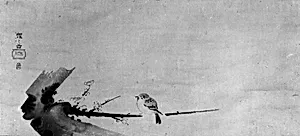
Sparrow on Plum Branch (Ume ni Suzume)
Medium
Hanging scroll; ink on paper
Dimensions
10 1/4 x 23 1/8 in. (26 x 58.7 cm)
Classification
Paintings
Culture & Period
Japan · Edo period (1615–1868)
Department
Asian Art
Museum
Metropolitan Museum of Art, New York, NY
Credit
The Howard Mansfield Collection, Purchase, Rogers Fund, 1936
Accession Number
36.100.67
Rights
Public Domain
Tags
Art Historical Context
In the serene world of Edo-period Japan (1615–1868), Shōkadō Shōjō's *Sparrow on Plum Branch (me ni Suzume)* the quiet poetry of nature through a delicate hanging scroll in ink on paper. Measuring just 10¼ x 23⅛ inches, this intimate work invites close contemplation, evoking the literati painting style (nanga) that Shōkadō, a monk, poet, and calligrapher, mastered Active in early 17th-century Kyoto, he was celebrated as one of the "Three Brushes" for his elegant fusion of calligraphy-like brushstrokes and Zen-inspired minimalism. The composition centers a lone sparrow perched on a twisting plum branch, its sparse blossoms hinting at winter's end and renewal—a motif rich in Japanese symbolism for resilience and fleeting beauty. Shōkadō's masterful ink techniques, from dry brush for textured bark to fluid washes for feathers, emphasize economy and vitality, reflecting the era's shift toward personal expression amid Tokugawa peace. Sparrows, humble yet spirited birds, embody everyday wonder in East Asian art. Acquired through The Howard Mansfield Collection and now in the Metropolitan Museum of Art's Asian Art Department, this scroll exemplifies Edo artistry's cultural depth, bridging painting, poetry, and philosophy for generations of admirers.
About the Artist
Shōkadō Shōjō · 1584–1639
Japanese, 1584?–1639