
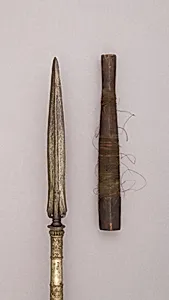
Spear with Sheath
Unknown Artist
18th–19th century
Medium
Wood, silver
Dimensions
L. with sheath 98 in. (248.9 cm); L. without sheath 97 in. (246.3 cm); L. of head 12 1/2 in. (31.8 cm); L. of ferrule 6 1/8 in. (15.6 cm); W. 1 1/2 in. (3.8 cm); Wt. 2 lbs. 4.3 oz. (1029.1 g); Wt. of sheath 3.8 oz. (107.7 g)
Classification
Shafted Weapons
Culture
Malayan
Department
Arms and Armor
Museum
Metropolitan Museum of Art, New York, NY
Credit
Bequest of George C. Stone, 1935
Accession Number
36.25.2010a, b
Rights
Public Domain
Art Historical Context
This magnificent *Spear with Sheath from 18th–19th century Mal exemplifies the fusion of functionality and artistry in Southeast Asian. Crafted from wood the long shaft—measuring nearly 98 inches (248.9 cm) with its sheath accented with silver on the 12½-inch (31.8 cm) blade head and 6⅛-inch (15.6 cm) ferrule, it weighs just over 2 pounds (1029.1 g) without the lightweight 3.8-ounce (107.7 g) sheath. Displayed in the Metropolitan Museum of Art's Arms and Armor Department, it entered the collection through the 1935 bequest of George C. Stone. In Malayan culture, spanning regions like modern-day Malaysia and Indonesia, spears like this were vital shafted weapons for warfare, hunting, and ceremonial processions. The silver elements likely highlight elite craftsmanship, where metalworking techniques elevated everyday arms into symbols of status and skill. Though the artist remains unknown, the object's imposing scale and precise construction reflect the period's emphasis on durable, balanced designs suited to close combat or ritual display. Visitors will appreciate how this piece bridges utility and aesthetics, offering a window into Malayan martial traditions during an era of regional trade and conflict.