
Speculum Romanae Magnificentiae: St. Peter's
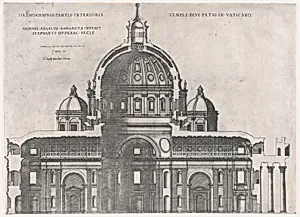
Medium
Engraving and etching
Dimensions
sheet: 12 15/16 x 17 11/16 in. (32.8 x 45 cm)
Classification
Prints
Department
Drawings and Prints
Museum
Metropolitan Museum of Art, New York, NY
Credit
Harris Brisbane Dick Fund, 1941
Accession Number
41.72(3.27)
Rights
Public Domain
Tags
Art Historical Context
Behold the majestic *Speculum Romanae Magnificentiae: St. Peter's*, a stunning 16th-century engraving and etching that captures the awe-inspiring dome and facade of St. Peter's Basilica in Rome. Published by Antonio Lafreri as part of his renowned *Speculum Romanae Magnificentiae* series—a groundbreaking collection of over 600 prints celebrating Rome's ancient ruins and Renaissance splendor—this print draws on the talents of Etienne DuPérac (designer), Michelangelo Buonarroti (whose architectural genius shaped the basilica's iconic dome), and Claudio Duchetti (engraver). Measuring 12 15/16 x 17 11/16 inches, it now graces the Metropolitan Museum of Art's Drawings and Prints department, acquired through the Harris Brisbane Dick Fund in 1941. Engraving and etching techniques allowed for intricate detail and tonal depth, making these prints vital tools for disseminating architectural marvels across Europe during the Renaissance. This medium not only preserved precise views of Rome's churches for pilgrims and scholars but also fueled the era's fascination with classical revival and papal grandeur. St. Peter's, as the heart of Christendom, symbolized the Catholic Church's resurgence amid Reformation challenges. Today, this print offers visitors a window into 16th-century Rome, blending artistry with history to evoke the eternal city's transformative power.
About the Artist
Antonio Lafreri|Etienne DuPérac|Michelangelo Buonarroti|Claudio Duchetti · 1507–1577
Antonio Lafreri, born Antoine du Pérac Lafréry around 1512 in Orgelet in the County of Burgundy (modern-day France), emerged as one of the most influential print publishers of the 16th century after settling in Rome around 1540. His early life and training remain sparsely documented, with no records of specific teachers or art schools; he arrived in the Eternal City as an engraver, producing works...