Ctrl K
1507–1577
Antonio Lafreri, born Antoine du Pérac Lafréry around 1512 in Orgelet in the County of Burgundy (modern-day France), emerged as one of the most influential print publishers of the 16th century after settling in Rome around 1540. His early life and training remain sparsely documented, with no records of specific teachers or art schools; he arrived in the Eternal City as an engraver, producing works that often copied those of rival publisher Antonio Salamanca. By 1544, Lafreri had established a shop on Via del Parione (now Via del Governo Vecchio), transitioning swiftly from engraving to print dealing and publishing, a move that positioned him at the heart of Rome's burgeoning graphic arts scene.
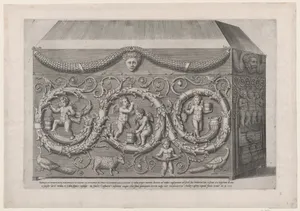
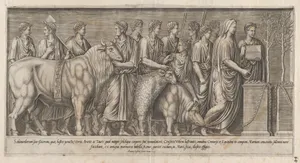
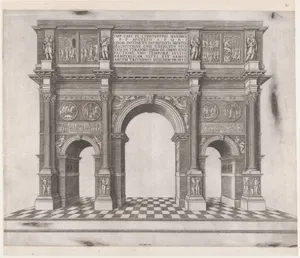
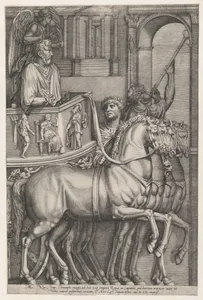
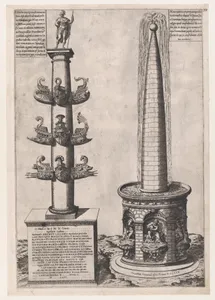
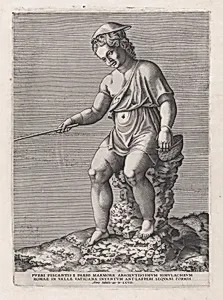
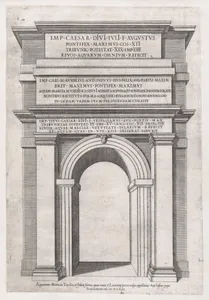
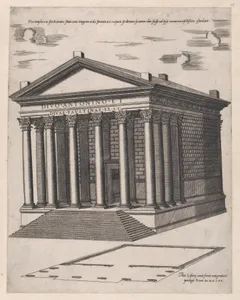
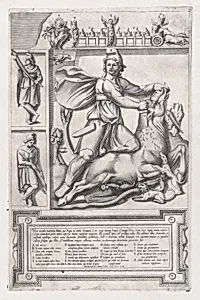
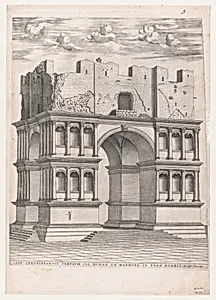
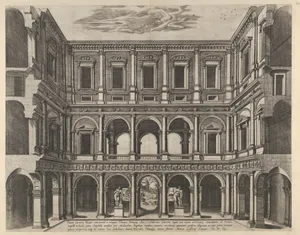
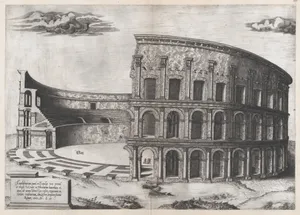
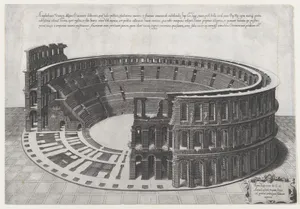
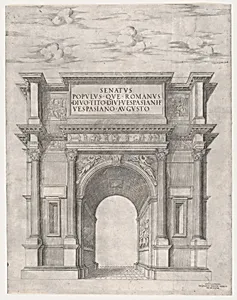
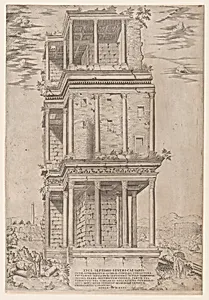
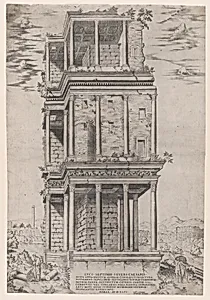
Lafreri's partnership with Salamanca from 1553 to 1563 amplified his output, allowing him to acquire plates and distribute engravings widely after Salamanca's death. His crowning achievement was the *Speculum Romanae Magnificentiae* ("Mirror of Roman Magnificence"), an eclectic album of over 100 engravings begun in the 1540s and formalized with a title page in 1575. This collection captured ancient Roman ruins, Michelangelo's architecture, festivals, and modern views through plates by top engravers, catering to Grand Tourists and antiquarians who customized their own bound volumes. He also issued *Vestigi dell’antichità di Roma* in collaboration with Étienne Du Pérac, showcasing classical sculptures.
In cartography, Lafreri pioneered the "Lafreri atlases," bespoke compilations of up to 80 maps and 35 city views assembled to order, titled *Tavole moderne di geografia* from 1556 onward, complete with innovative Atlas frontispieces around 1570. Collaborating with luminaries like Giacomo Gastaldi, Paolo Forlani, and Battista Agnese, he owned plates by artists such as Cornelis Cort and Jacob Bos, producing works like a 1561 Asia map and 1566 Naples views. His 1572 catalogue listed nearly 500 items, the first of its kind.
Lafreri's legacy endures as the father of the modern atlas and a catalyst for the "Lafreri School" of Italian mapmakers (ca. 1544–1602), whose loose-sheet innovations shaped Renaissance print culture. Upon his death in 1577, cousins Étienne and Claude Duchet inherited his stock, perpetuating his editions into the next century. Today, his rare atlases fetch millions, underscoring his pivotal role in bridging art, topography, and commerce.