
Spheroconical Vessel
Unknown Artist
11th–12th century
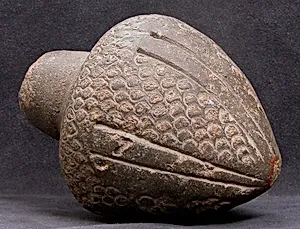
Medium
Earthenware; stamped, incised, unglazed
Dimensions
H. 4 13/16 in. (12.2 cm) Max. Diam. 3 5/8 in. (9.2 cm)
Classification
Ceramics
Department
Islamic Art
Museum
Metropolitan Museum of Art, New York, NY
Credit
Museum accession
Accession Number
83.3.151
Rights
Public Domain
Art Historical Context
This delicate spheroconical vessel, by an unknown artist in the th–12th century exemplifies the refined ceramic traditions of the Islamic world. Housed in the Metropolitan Museum of Art's of Islamic Art, it just 4 13/16 inches (12.2 cm) tall with a maximum diameter of 5/8 inches (9.2 cm), its compact, bulbous form suggesting portability for personal or household use. Made from unglazed earthenware, the vessel's earthy tone highlights its handmade authenticity, a common choice in regions where kilns produced durable yet decorative wares during the Seljuk era. The surface bears intricate stamped and incised decorations, techniques that allowed artisans to create textured patterns—likely geometric motifs or floral designs—without costly glazes. Stamping involved pressing carved tools into the soft clay before firing, while incising used fine tools for precise lines, adding depth and tactile appeal. These methods reflect the ingenuity of Islamic potters, who elevated everyday objects into art through skilled surface treatments. As a testament to anonymous craftsmanship, this vessel offers a glimpse into medieval Islamic material culture, where ceramics bridged utility and aesthetics. Its survival underscores the enduring legacy of these modest yet masterful creations.