
Spheroconical Vessel
Unknown Artist
11th–12th century
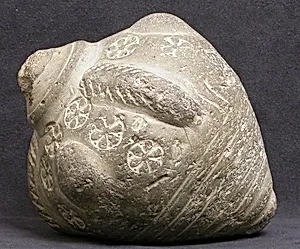
Medium
Earthenware; stamped, incised, and unglazed
Dimensions
H. 5 in. (12.7 cm) W. 4 in. (10.2 cm)
Classification
Ceramics
Department
Islamic Art
Museum
Metropolitan Museum of Art, New York, NY
Credit
The Cesnola Collection, Purchased by subscription, 1874–76
Accession Number
74.51.5840
Rights
Public Domain
Art Historical Context
Nestled in the Islamic Art galleries of the Metropolitan Museum of, this Spherocon Vessel from the 11th–12th century exemplifies everyday artistry of medieval Islamic ceramics. Crafted unglazed earthenware, it a modest 5 inches high and 4 inches wide, its rounded, conical form suggesting practical use—perhaps for holding liquids like oils, perfumes, or rosewater, common in the bustling trade networks of the Islamic world. The vessel's surface bears intricate stamped and incised decorations, techniques that allowed artisans to create textured patterns without the need for costly glazes. Stamping involved pressing molds into the soft clay for repetitive motifs, while incising used fine tools to carve delicate lines, evoking geometric or floral designs typical of the era's aesthetic restraint and skill. Produced during a golden age of Islamic craftsmanship, likely in regions like Cyprus or the Levant, such vessels highlight the fusion of utility and subtle beauty in unglazed wares. Acquired through The Cesnola Collection in the 1870s, this piece offers a tangible link to daily life in the medieval Islamic world, where form followed function yet whispered of cultural refinement. A quiet treasure for visitors seeking the poetry in pottery.