
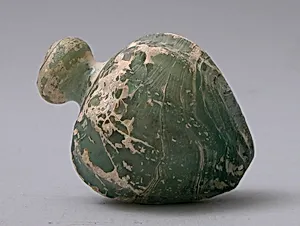
Spheroconical Vessel
Unknown Artist
10th–12th century
Medium
Glass; mold blown
Dimensions
H. 2 1/2 in. (6.4 cm) Diam. 1 15/16 in. (5 cm) Wt. 2.2 oz. (62.8 g)
Classification
Glass
Department
Islamic Art
Museum
Metropolitan Museum of Art, New York, NY
Credit
Fletcher Fund, 1975
Accession Number
1975.61.2
Rights
Public Domain
Art Historical Context
This delicate spheroconical vessel, by an unknown artist between the 10th and 12th centuries, exemplifies exquisite glassmaking traditions of the Islamic world. just 2½ inches tall with a diameter of nearly 2 inches, its petite form—bulbous spherical body tapering to a slender conical neck—suggests it held precious substances like perfumes, oils, or medicines. Acquired through the Fletcher Fund in 1975, it resides in the Metropolitan Museum of's Department of Islamic Art. The's medium, mold-blown glass, highlights a sophisticated technique perfected by Islamic artisans during the medieval period. Molten glass was blown into a patterned mold, creating textured surfaces that caught the light and added visual intrigue without complex decoration. This method allowed for mass production of high-quality items, reflecting the era's technological prowess and trade networks spanning the Middle East and beyond. Such vessels were cultural treasures, symbolizing luxury and refinement in daily life and elite households. Their survival attests to the durability of glass as a medium, offering modern visitors a tangible link to the vibrant Islamic golden age of innovation and artistry.