
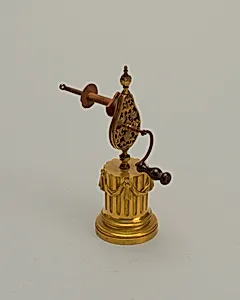
Spinning wheel
mid- 18th century
Classification
metalwork
Department
Smithsonian Collection
Museum
Smithsonian American Art Museum
Credit
Purchased for the Museum by the Advisory Council
Accession Number
1909-25-76
Rights
Public Domain
About this artwork
Research in Progress
Art Historical Context
This elegant spinning wheel, crafted in mid-18th-century America, exemplifies the everyday ingenuity of colonial households. Dating to a time when self-sufficiency was vital amid growing tensions with Britain, such tools were essential for transforming raw wool or flax into yarn, supporting textile production at home. Classified as metalwork within the Smithsonian American Art Museum's collection, it likely features finely wrought iron or brass components—pedals, fittings, or spindles—that highlight the skilled blacksmithing and metal craftsmanship of the era. Though the artist remains unknown and research is ongoing, the wheel's presence in the Smithsonian underscores its cultural resonance. Spinning was not just labor but a symbol of industry and patriotism; during boycotts of British goods, "homespun" fabrics became badges of colonial resolve. Purchased for the museum by the Advisory Council, this artifact invites us to ponder the hands that shaped it and the rhythms of pre-industrial life it once powered. (178 words)
About the Artist
Unknown
The artist designated as "Unknown" in our virtual museum's collection exemplifies a poignant chapter in art history: creators whose identities have faded into obscurity despite the enduring power of their work. With only one known artwork attributed to them in our holdings, this figure represents countless anonymous hands that shaped visual culture across centuries. Museums worldwide, including th...