
Spoon
1704–5
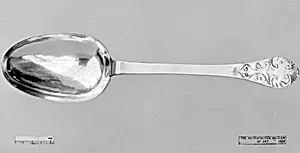
Medium
Silver
Dimensions
Length: 8 in. (20.3 cm)
Classification
Metalwork-Silver
Culture
British, Exeter
Department
European Sculpture and Decorative Arts
Museum
Metropolitan Museum of Art, New York, NY
Credit
Gift of Mr. and Mrs. Howard Eric, 1937
Accession Number
37.137
Rights
Public Domain
Art Historical Context
This delicate silver spoon, crafted by Exeter silversmith Edward Sweet 1704–5, exemplifies the refined metalwork of early 18-century Britain during Queen Anne's reign. Measuring 8 inches (20.3 cm) in length, it hails from a time when silver objects were essential household items, blending everyday utility with subtle elegance. As a product of the Exeter Assay Office, it likely bears hallmarks authenticating its maker, purity, and origin—standard practices that ensured quality in British silver production. Spoons like this were more than utensils; they symbolized prosperity and social standing in Georgian-era homes, often passed down through generations. Sweet's work reflects the regional pride of Exeter, a historic center for silversmithing, where artisans employed skilled techniques such as hammering, chasing, and polishing to create gleaming, durable pieces. The spoon's survival highlights the enduring craftsmanship of the decorative arts. Today, this treasure resides in the Metropolitan Museum of Art's Department of European Sculpture and Decorative Arts, a gift from Mr. and Mrs. Howard Eric in 1937. It invites us to appreciate the quiet artistry behind the ordinary, connecting us to the daily lives of Britain's past.