
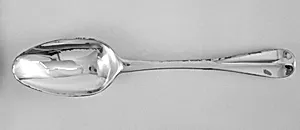
Spoon
1717–18
Medium
Silver
Dimensions
Length: 8 1/16 in. (20.5 cm)
Classification
Metalwork-Silver
Culture
British, London
Department
European Sculpture and Decorative Arts
Museum
Metropolitan Museum of Art, New York, NY
Credit
Gift of George D. Widener and Mrs. Eleanor Widener Dixon, 1958
Accession Number
58.7.102
Rights
Public Domain
Art Historical Context
Nestled in the Metropolitan Museum of Art's European Sculpture and Decorative Arts collection, this elegant silver spoon by London silversmith Benjamin Watts dates to 1717–18. Measuring a precise 8 1/16 inches (20.5 cm) in length, it exemplifies the exquisite metalwork craftsmanship of early Georgian Britain. Generously gifted by George D. Widener and. Eleanor Widener Dixon 1958, the spoon showcases the refined techniques of silver hollowware, where purity of metal and subtle shaping highlighted a maker's skill. Crafted during the reign of George I, shortly after Queen Anne's era, this piece reflects London's thriving silver trade, fueled by the city's guild-regulated workshops. Silversmiths like Watts bore hallmarks—maker's mark, lion passant for sterling silver, and leopard's head for London—to guarantee quality, making such items both functional utensils and symbols of prosperity. Spoons were essential to the rising middle and upper classes' dining rituals, often displayed as heirlooms. Today, this unassuming yet masterful object invites us to appreciate the artistry in everyday luxury, bridging 18th-century domestic life with modern admiration for British decorative arts. Its survival underscores the enduring allure of silver's luster and the cultural prestige of London's goldsmiths.