
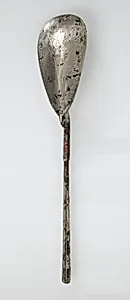
Spoon
Unknown Artist
5th–6th century
Medium
Silver
Dimensions
Overall: 9 7/16 x 1 3/4 x 1 in. (24 x 4.5 x 2.5 cm) shovel: 3 3/8 x 1 3/4 x 7/16 in. (8.6 x 4.5 x 1.1 cm)
Classification
Metalwork-Silver
Culture
Byzantine
Department
Medieval Art
Museum
Metropolitan Museum of Art, New York, NY
Credit
Rogers Fund, 1913
Accession Number
13.42.1b
Rights
Public Domain
Art Historical Context
This elegant silver spoon from the Byzantine, dating to the 5th–6th century, offers a glimpse into the refined craftsmanship of early medieval metalwork. Measuring nearly 9½ inches long overall, with a broad shovel bowl about 3⅜ inches wide, it exemplifies the functional beauty of Byzantine tableware. Crafted from high-quality silver, such spoons were prized possessions, likely used by the elite for dining or even in liturgical ceremonies, reflecting the empire's blend of Roman legacy and emerging Christian influences. Byzantine silversmiths were renowned for their technical mastery, employing techniques like hammering, chasing, and polishing to create durable yet luxurious objects. This spoon's simple yet proportionate form highlights the period's emphasis on symmetry and utility, hallmarks of an empire that spanned Europe, Asia, and Africa. As a survivor from antiquity, it speaks to the vibrancy of Constantinople's workshops, where silver goods symbolized wealth and cultural sophistication amid the transition from late antiquity to the medieval world. Acquired through the Rogers Fund in 1913 and housed in The Metropolitan Museum of Art's Medieval Art department, this unassuming artifact connects us to everyday Byzantine life, reminding visitors that even humble utensils carried profound artistic value.