
Spoon (part of a dining service)
ca. 1805
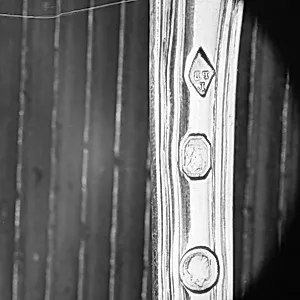
Medium
Silver gilt
Dimensions
Length: 7 5/8 in. (19.4 cm)
Classification
Metalwork-Silver
Culture
French, Paris
Department
European Sculpture and Decorative Arts
Museum
Metropolitan Museum of Art, New York, NY
Credit
Gift of Audrey B. Love, in memory of her husband, C. Ruxton Love Jr., 1974
Accession Number
1974.378.40
Rights
Public Domain
Art Historical Context
This elegant silver gilt spoon, crafted by Parisian goldsmith Pierre-Benoîtillon around 1805, forms part of a luxurious dining service designed for the refined tables of early 19th-century France Measuring 7 5/8 inches in length, its gleaming surface—achieved through the gilding technique of applying a thin layer of gold over silver—exemplifies the opulence of the Napoleonic Empire style. Lorillon, a master silversmith active in Paris, specialized in such high-end metalwork, blending neoclassical motifs with imperial grandeur to cater to the elite. During this era, silver gilt tableware symbolized wealth and status amid France's post-Revolutionary recovery and Napoleon's rise. Dining services like this one were status symbols for the emerging bourgeoisie and nobility, often featuring intricate chasing, engraving, or cast elements (though specifics here highlight the medium's luster). The spoon's form reflects practical elegance, balancing functionality with decorative flair suited for formal banquets. Today, housed in the Metropolitan Museum of Art's Department of European Sculpture and Decorative Arts as Metalwork-Silver (gift of Audrey B. Love, 1974), it offers a tangible glimpse into French luxury craftsmanship, reminding us how everyday objects embodied cultural aspirations.